How it works
How Concrete Polishing Works
Concrete polishing is a sequence of grinding and refining passes that turns a plain slab into a finished floor. Knowing the stages helps you compare quotes, plan around the noise and get the house ready.
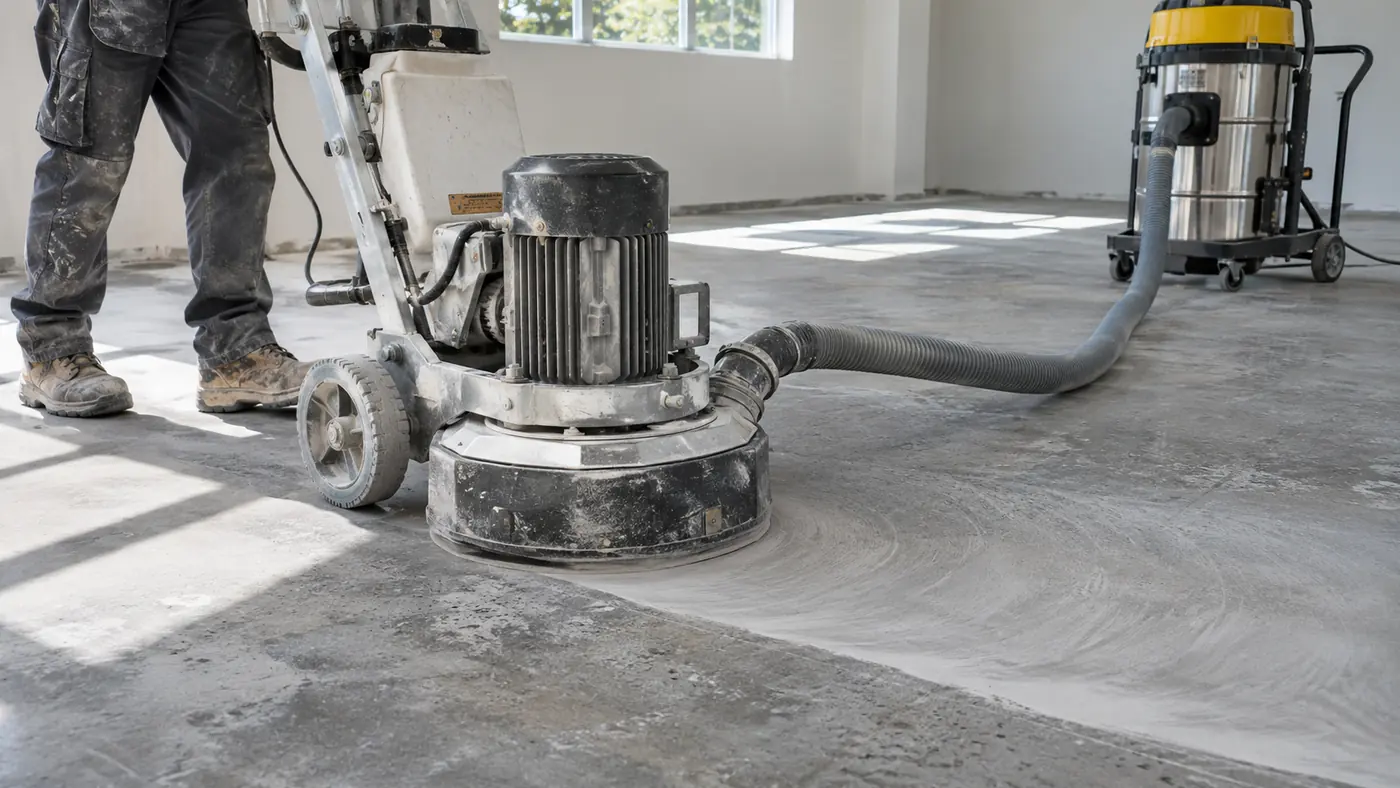
The Stages of a Polishing Job
Inspection and set-up
The slab is checked for cracks, patches, coatings and moisture, the finish is confirmed and walls, cabinets and doorways are protected.
Initial grinding
Coarse metal-bond diamonds flatten the surface, remove contaminants and open the slab to the stone exposure you chose.
Repairs
Cracks, holes and pinholes are filled once the slab is open, so the filler is ground flush with the rest of the floor.
Progressive refinement
Finer and finer diamonds remove the scratches left by the previous pass.
Densifying
A liquid densifier is applied to harden the surface and reduce dusting.
Final polishing
Fine resin diamonds build the sheen, from matte through to gloss.
Protection and handover
A guard or sealer is applied where the system calls for it, then the floor is cleaned, inspected with you and handed over with care instructions.
Grits and Passes
Diamond tooling is graded by grit. Low numbers cut hard and fast; high numbers refine. Each pass has to remove the scratch pattern of the one before, so skipping a step leaves swirl marks that show up once the floor is polished.
The number of passes depends on the slab and the finish. A sound slab finished to a cream look needs less work than an uneven or patched slab ground to full stone exposure. When comparing quotes, ask how far each one refines the floor and whether the finish is mechanically polished or grind and seal.
What a Densifier Does
A densifier is usually a silicate solution that reacts with free lime in the concrete to form a harder surface. It reduces dusting and helps the floor take a polish.
It does not fix structural cracks, make a weak slab strong or stop future movement.
Dust Control
Grinding concrete produces fine dust that contains crystalline silica, which is a serious health hazard when breathed in. Grinders should be connected to industrial dust extractors, and work areas sealed off from the rest of an occupied home.
Ask how dust will be managed before you book, particularly if anyone at home has asthma or other breathing problems.
Noise and Working Hours in Brisbane
Grinders are loud. Brisbane City Council's building work noise rules say audible building work noise is not allowed from 6.30pm to 6.30am Monday to Saturday or at any time on Sundays and public holidays, so most residential grinding happens on weekdays and Saturdays during the day.
Telling neighbours a few days ahead is good practice, especially in townhouses and units where noise carries through the slab.
Getting Your Home Ready
- Empty the rooms being worked on, including rugs and anything on the floor
- Make sure power and water are available where the installer needs them
- Share any plans showing pipes, conduits or in-slab heating
- Confirm the finish, stone exposure and sheen in writing
- Arrange access for the agreed working hours
- Plan for pets and children to be kept away from the work area
After the Last Pass
When you can walk on the floor, return furniture and lay rugs depends on whether a sealer or guard was used and the product's cure time. Your installer should give you those times in writing at handover.
Use felt pads on furniture legs from day one and lift heavy items rather than dragging them. See the polished concrete care guide for cleaning.
Every slab is different
This guide covers what usually applies. Your slab, finish and site decide the details, which is why the floor is inspected before it is quoted.
More Guides
How Concrete Polishing Works: FAQs
Is concrete ground wet or dry?
Both methods are used. Dry grinding with dust extraction is common indoors because it avoids slurry, while wet grinding suits some stages and outdoor work.
Do I need to move out while the floor is polished?
Not always. The rooms being worked on must be empty, but many people stay in other parts of the house. Larger jobs through living areas can be easier if you stay elsewhere for the noisiest days.
How long does polishing a home take?
A typical home floor takes a few days, plus cure time for any sealer. Removing old coverings, heavy glue, repairs and full stone exposure all add time.
Why do edges cost more?
Large machines cannot reach walls, corners and doorways, so edges are ground with smaller tools and more hand work.