Existing floors
Can My Existing Slab Be Polished?
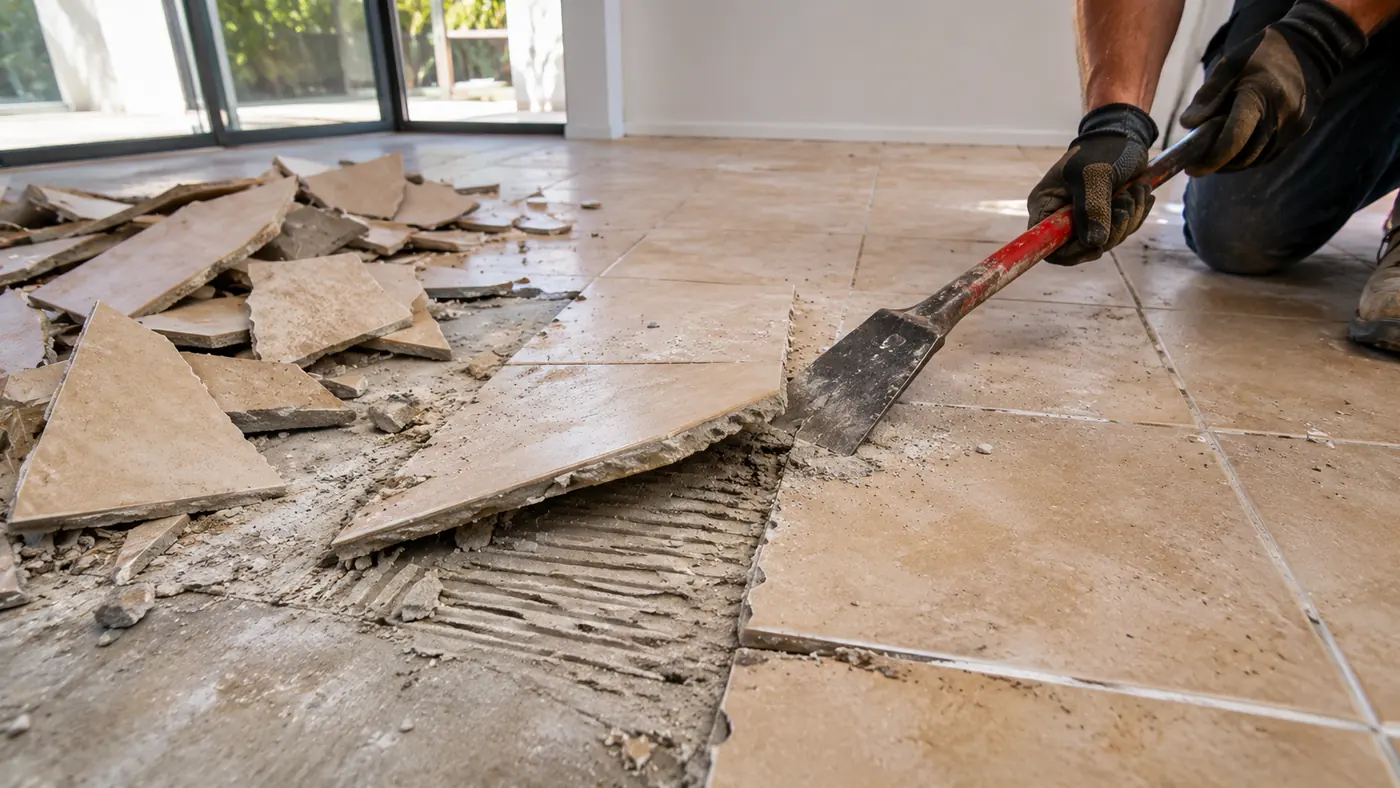
Most Brisbane renovations start with the same question: the tiles or carpet are coming up, so can the slab underneath be polished? Often it can, but an existing slab polishes as what it is, not as a brand new floor.
What Makes a Good Candidate
A sound slab with enough thickness, few large repairs and a reasonably even surface usually polishes well. Cracks, old glue and patches do not rule a slab out, but they change how the finished floor looks and how much preparation it needs.
What Turns Up Under Old Floor Coverings
- Tile adhesive and thick tile beds
- Carpet glue and underlay residue
- Paint, sealers and old coatings
- Patches from plumbing or renovation work
- Shrinkage cracks hidden under tiles
- Colour changes where different pours meet
- Low spots, lips and uneven areas
- Signs of past moisture or leaks
Patches, Glue and Two Pours
Grinding removes surface contamination, but patches and repairs are a different material from the slab around them and usually stay visible. Where an extension or later pour meets the original slab, expect a change in colour and stone at the join.
Many owners choose to keep these marks as part of the floor's character. If you want a uniform look over a heavily patched slab, a coating or another floor covering may suit better.
Photos Versus an On-Site Look
Photos help spot obvious damage and coatings, so they are a useful first step. They cannot show hardness, moisture or how the stone sits below the surface, which is why an on-site check, and sometimes a small test grind, is needed before a firm quote.
Moisture and Flood-Affected Slabs
Ground-level slabs in Brisbane can hold moisture after wet seasons, and many homes in low-lying suburbs were inundated in the 2011 and 2022 floods. Floodwater can leave silt, salts and contaminants in the concrete.
A flood-affected slab should be cleaned, dried and checked for moisture before any sealer or coating goes on, because trapped moisture can cause clouding, white marks or coatings that lift.
Older Brisbane Homes
Many Queenslanders have been raised or built in underneath, leaving a slab under the house that later became a rumpus room, studio or garage. These slabs vary widely in age and quality and are worth checking closely before choosing a finish.
Some older tiles, vinyl and adhesives contain asbestos. If the home was built before 1990 and you are not sure what is on the floor, have it tested before anything is ground. See floor removal and preparation.
Every slab is different
This guide covers what usually applies. Your slab, finish and site decide the details, which is why the floor is inspected before it is quoted.
More Guides
Can My Existing Slab Be Polished?: FAQs
Can my slab be assessed from photos?
Photos give a useful first indication, but hardness, moisture and the likely stone exposure need an on-site check.
Will the floor look like the photos I have seen?
Only if your slab is similar. Every slab has its own stone, colour and history, so ask to see a test area or examples on similar slabs.
Can a flood-affected slab be polished?
Often, once it has been cleaned, dried and checked for moisture and contamination. Sealers and coatings should not go on a damp slab.
What if the slab is too damaged to polish well?
A grind and seal, epoxy or a new floor covering over a properly prepared slab may be a better choice. An honest inspection should tell you.